Cat Whiskers Explained: What They Do and Why You Should Never Trim Them
How cat whiskers work as high-tech sensors, where cats have them, what whisker positions say about mood, whisker fatigue, shedding, and why trimming is harmful.
On this page
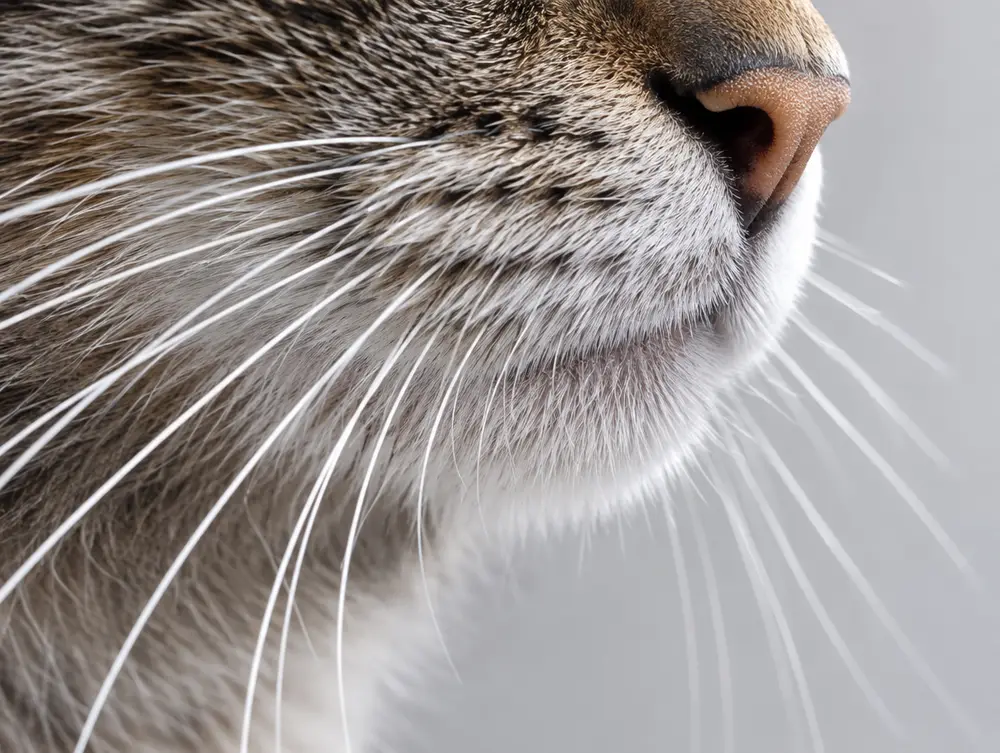
Whiskers aren't just cute. They're one of a cat's most important tools, acting like built-in radar that helps them navigate, hunt and stay safe. Here's everything a new owner should know.
What are whiskers?
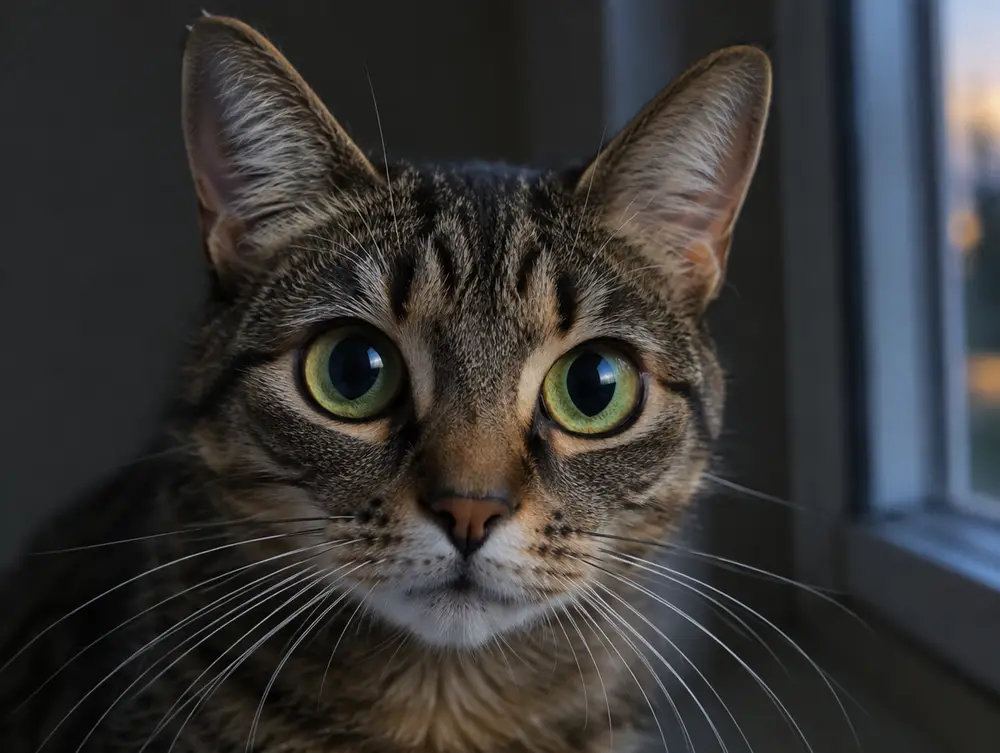
Whiskers, or vibrissae, are long, thick, stiff hairs. Unlike ordinary fur, they're rooted about three times deeper in the skin, in follicles packed with nerves and blood vessels. The whisker itself has no feeling, but the slightest movement is transmitted to the nerve-rich follicle and on to the brain.
Whiskers are so sensitive that they can detect tiny changes in air currents, letting a cat sense objects, and even movement, without touching them.
Where do cats have whiskers?
Most people only notice the muzzle whiskers, but cats have several sets:
- Muzzle (mystacial) whiskers: usually about 12 on each side, arranged in four neat rows. Each side can move independently.
- Above the eyes: like eyebrows, they trigger a protective blink when touched.
- On the cheeks and chin.
- On the back of the front legs (carpal whiskers): they help cats feel prey they're holding and judge their footing when climbing.
What whiskers do
Measure tight spaces
A cat's muzzle whiskers are roughly as wide as its body, so they help a cat judge whether it can fit through a gap. (This works less well for overweight cats, whose bodies outgrow their whiskers.)
Navigate in the dark
By sensing air currents bouncing off furniture and walls, whiskers help cats move around confidently in low light.
See up close
Cats are farsighted and can't focus on objects very near their face. When hunting or playing, cats sweep their muzzle whiskers forward around prey to sense its position and movement, filling in the visual blind spot right under their nose. See how cats see, hear and smell.
Protect the eyes
Touching the whiskers above the eyes triggers a blink, protecting the eyes from branches, grass and dust.
Communicate mood
Whiskers are a great mood indicator. See cat body language.
| Whisker position | Usually means |
|---|---|
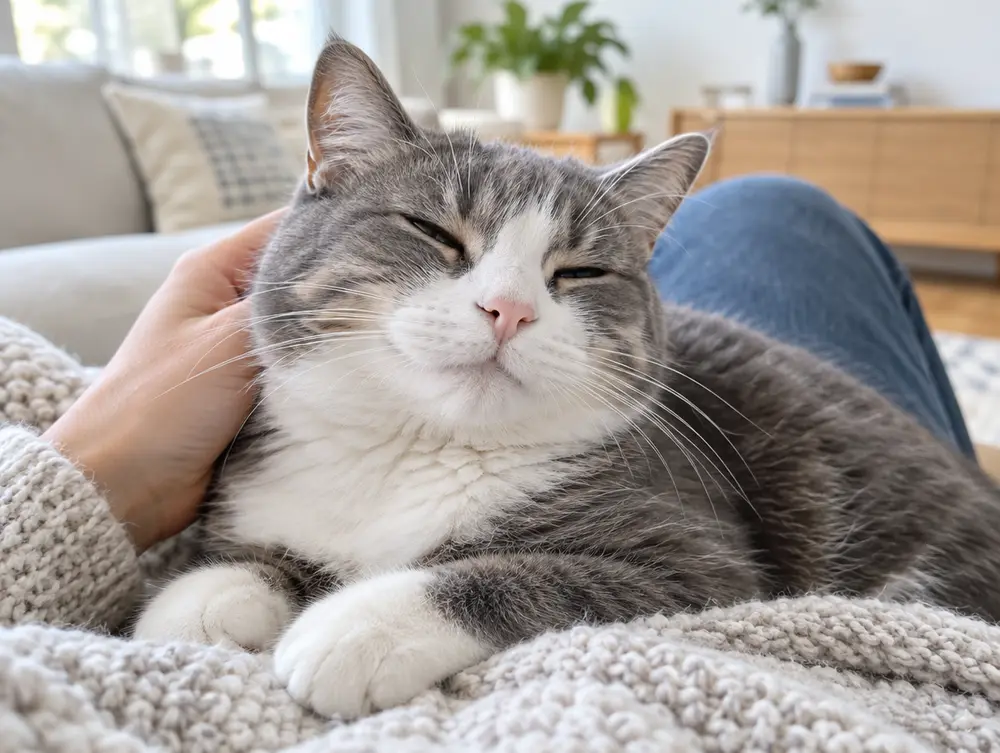
| Relaxed, pointing out to the side | Calm and content |
| Pushed forward, fanned out | Curious, alert, hunting or playing |
| Pulled back flat against the face | Fearful, defensive or in pain |
| Tense and pointing forward, with a tense face | Possible pain (part of the Feline Grimace Scale) |
Never trim your cat's whiskers
Cutting whiskers doesn't hurt in the moment (there are no nerves in the hair shaft), but it removes an important sense. Cats with trimmed whiskers can become disoriented, stressed and clumsy, and may misjudge jumps and gaps. Whiskers do grow back over several weeks, but there's no good reason to cut them.
Also avoid pulling, bending or playing roughly with your cat's whiskers. Pulling stimulates the sensitive follicle and is painful.
Is it normal for whiskers to fall out?
Yes. Like other hair, whiskers have a growth cycle. Finding an occasional whisker on the floor is normal; a new one grows in its place. Cats don't usually lose many at once.
See your vet if your cat suddenly loses lots of whiskers, they become brittle or break, or you notice skin redness or sores on the muzzle. These can be signs of skin problems, allergies, infection, or over-grooming by another cat.
What is "whisker fatigue"?
"Whisker fatigue" or "whisker stress" describes the idea that some cats find it unpleasant when their whiskers repeatedly brush against the sides of a deep, narrow bowl. Some owners notice cats scooping food out with a paw, eating only from the middle, or seeming reluctant to eat.
Scientific evidence is limited and mixed, but the fix is easy: offer wide, shallow dishes for food and water, filled generously. Many cats prefer them anyway. See cats and water.
Whisker facts
- Kittens are born with whiskers, before their eyes even open.
- Whiskers can be white, black or two-tone, and don't always match the fur color.
- Curly-coated breeds like the Devon Rex and Cornish Rex often have curly, brittle whiskers. Some Sphynx cats have very short or no whiskers.
- Cats in the wild use whiskers to detect prey movement after pouncing, even in total darkness.