Why Do Cats Sleep So Much? Cat Sleep Explained
How many hours cats sleep, why they nap so much, light sleep vs deep sleep, do cats dream, best sleeping spots, and when sleeping changes signal a health problem.
On this page
If it seems like your cat spends most of the day asleep, you're right. Sleeping a lot is completely normal for cats. Here's why, and how to tell normal snoozing from a sign that something's wrong.
How much do cats sleep?
| Age | Typical sleep per day |
|---|---|
| Kittens | 16–20 hours, in short bursts |
| Adult cats | about 12–16 hours |
| Senior cats | often more than adults, up to 18–20 hours |
That means many cats spend around two-thirds of their lives asleep. Individual cats vary: active young cats, cats in busy homes and highly social breeds may sleep less, while calm breeds and older cats may sleep more.
Why do cats sleep so much?
They're built to hunt in bursts
In the wild, a cat's day revolves around hunting: short, intense bursts of stalking, sprinting and pouncing, followed by long periods of rest. Hunting small prey uses a lot of energy, and a cat may need to hunt many times a day. Sleeping conserves energy between hunts.
Your indoor cat may never hunt anything more dangerous than a toy mouse, but the instinct to rest a lot remains.
They're crepuscular
Cats are naturally most active at dawn and dusk. That's why many cats nap through the day, get the "zoomies" in the evening and wake you up at 5 a.m. You can gently shift this pattern. See night yowling and early waking.
Boredom and weather
Indoor cats with little to do may sleep more out of boredom. Cats also tend to sleep more on cold or rainy days.
Light sleep vs deep sleep
Much of a cat's sleep is light dozing. Their ears keep swiveling toward sounds and they can spring awake instantly. This is the classic "cat nap", and it keeps them alert to danger.
Cats also enter deep sleep, including REM (rapid eye movement) sleep. In this phase you may see:
- Twitching whiskers, paws or tail
- Rapid eye movement under the eyelids
- Little chirps or muffled sounds
- A completely floppy, relaxed body
Do cats dream?
We can't ask them, but cats show the same REM sleep patterns associated with dreaming in humans. Classic sleep research on cats found that when the brain mechanism that normally keeps muscles still during REM sleep was disabled, sleeping cats appeared to stalk and pounce on invisible prey. So it's very likely cats dream, possibly about hunting.
Sleeping positions and what they mean
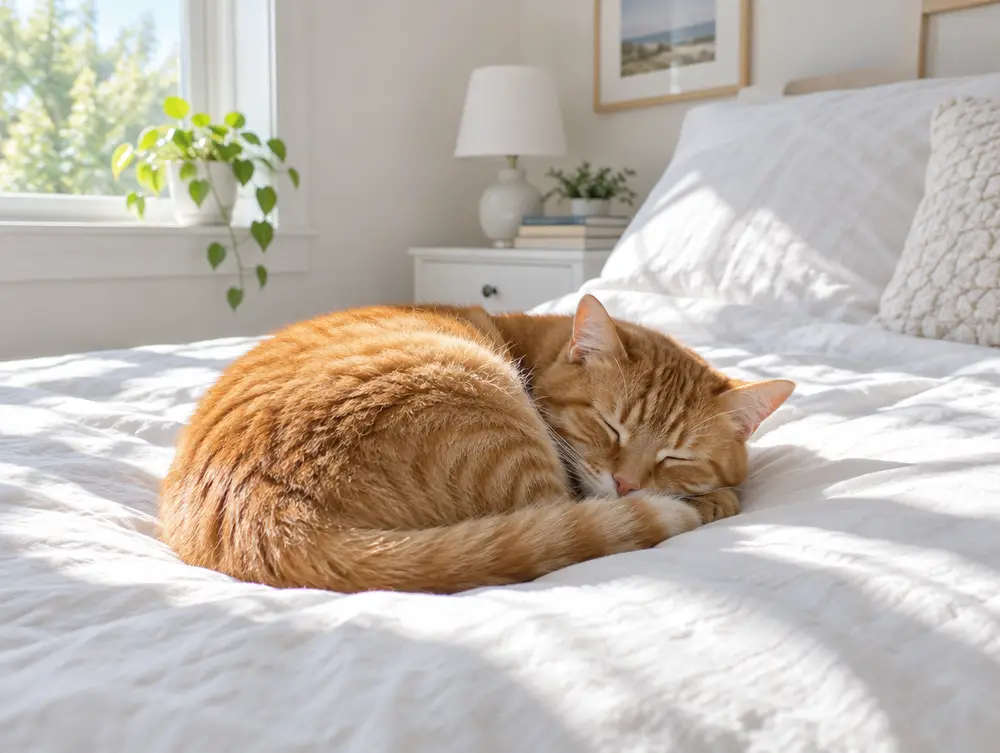
- Curled in a tight ball: conserving heat and protecting vital organs. Common in cold weather or in unfamiliar places.
- The "loaf" (paws tucked under): relaxed but ready to move.
- Stretched out on the side: comfortable and relaxed.
- Belly up: deeply relaxed and trusting. It's a compliment, but not necessarily an invitation for belly rubs.
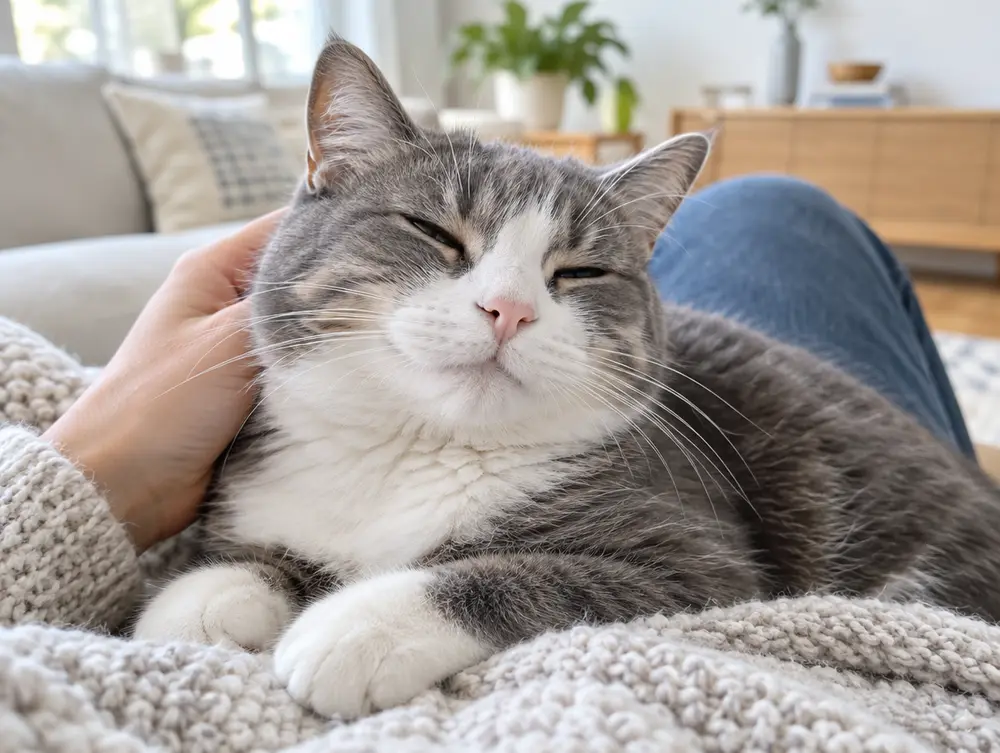
- Eyes half open: dozing lightly while keeping watch.
- Face covered with a paw: blocking out light, often in bright rooms.
Where cats like to sleep
Cats choose sleeping spots for warmth, safety and height:
- Sunny windowsills and patches of sunlight
- Warm places: radiators, laptops, freshly washed laundry, your pillow
- High places, where they feel safe from threats
- Enclosed spaces like boxes, cat caves and wardrobes
Offer several comfortable options around your home, including at least one elevated spot and one enclosed hideaway. Cats often rotate between favorite spots. See catifying your home.
Should my cat sleep on my bed?
That's a personal choice. Many cats love sleeping with their people for warmth and companionship. If you have allergies, a young baby or very disrupted sleep, a cosy cat bed elsewhere is fine, and cats adapt to consistent rules.
When sleep changes are a warning sign
Because cats sleep so much, it can be hard to notice when something's wrong. Watch for changes from your cat's normal pattern:
- Sleeping much more than usual, being hard to wake, or lethargic when awake
- Sleeping much less, restlessness, pacing or yowling at night, especially in older cats (possible hyperthyroidism, high blood pressure, pain or cognitive changes)
- Sleeping in unusual places, or hiding to sleep
- Changes in posture: sleeping hunched, or unable to get comfortable
- Breathing fast or with effort while asleep: a resting cat should breathe fewer than about 30 times a minute