Why Cats Don't Drink Much Water (and How to Help)
Why cats drink so little, how much water a cat needs, signs of dehydration, and practical tips — bowls, fountains and wet food — to increase water intake.
On this page
Many cat owners worry that their cat hardly drinks. Some of that is normal: domestic cats descend from desert-dwelling wildcats that got most of their water from prey. But low water intake contributes to urinary problems such as crystals, bladder stones and cystitis, so encouraging hydration is worthwhile.
How much water does a cat need?
A commonly used estimate is about 40–60 ml per kg of body weight per day in total, from both drinking and food. A 4 kg cat therefore needs roughly 160–240 ml (about ⅔ to 1 cup) daily.
- A cat eating mostly wet food (75–80% water) may get most of that from meals and drink very little — that's normal.
- A cat on dry food (about 10% water) needs to drink much more.
Signs of dehydration
- Lethargy, reduced appetite
- Dry or tacky gums
- Sunken eyes
- Skin "tenting": gently lift the skin between the shoulder blades — in a hydrated cat it springs back immediately
- Reduced or very concentrated urine (fewer, smaller clumps in the litter)
Dehydration is often a sign of an underlying illness such as vomiting, diarrhea, kidney disease or diabetes. Contact your vet if you notice these signs.
How to help your cat drink more
Offer wet food
The single most effective way to increase water intake. Even replacing one dry meal with wet food makes a big difference. You can also add a little warm water to wet food.
Choose the right bowl
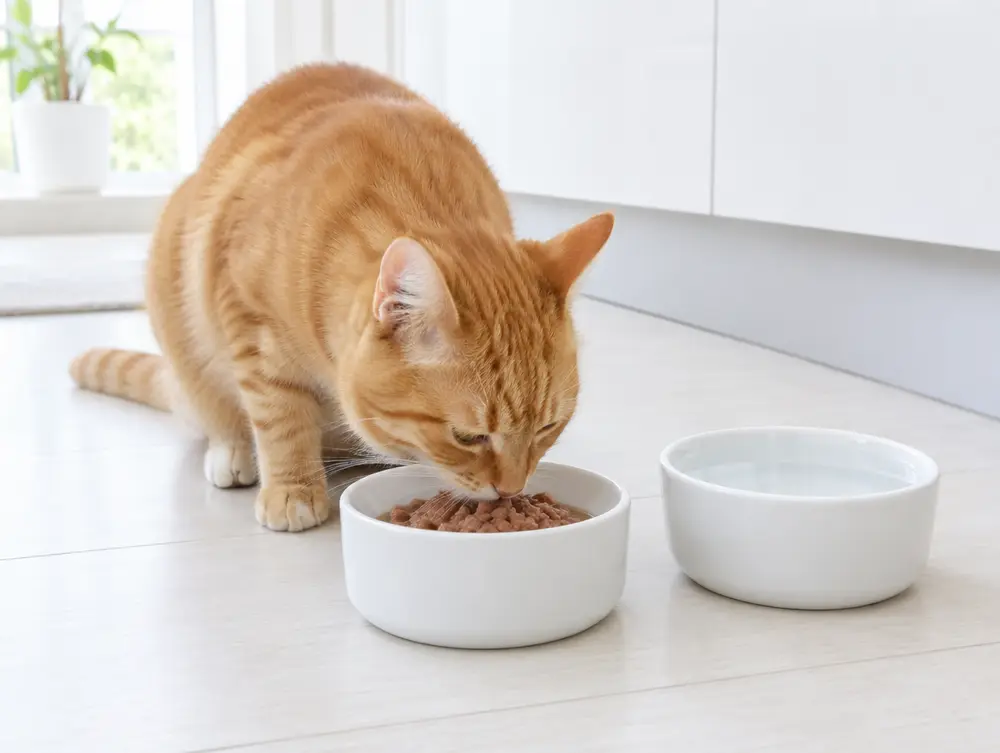
- Wide and shallow: many cats dislike their whiskers touching the sides of a narrow bowl.
- Ceramic, glass or stainless steel: easier to keep clean than plastic, which can scratch and harbor bacteria and odors.
- Fill to the brim so cats can drink without putting their head deep into the bowl.
Place water in the right spot
- Away from food. In nature, cats avoid drinking near a kill, which could contaminate water. Many cats drink more when water is in a separate spot.
- Away from the litter box — always.
- Several bowls around the home, including on each floor.
Keep it fresh
Change water daily and wash bowls regularly. Some cats prefer water that has stood for a while (chlorine dissipates); some prefer it cold; experiment.
Try a water fountain
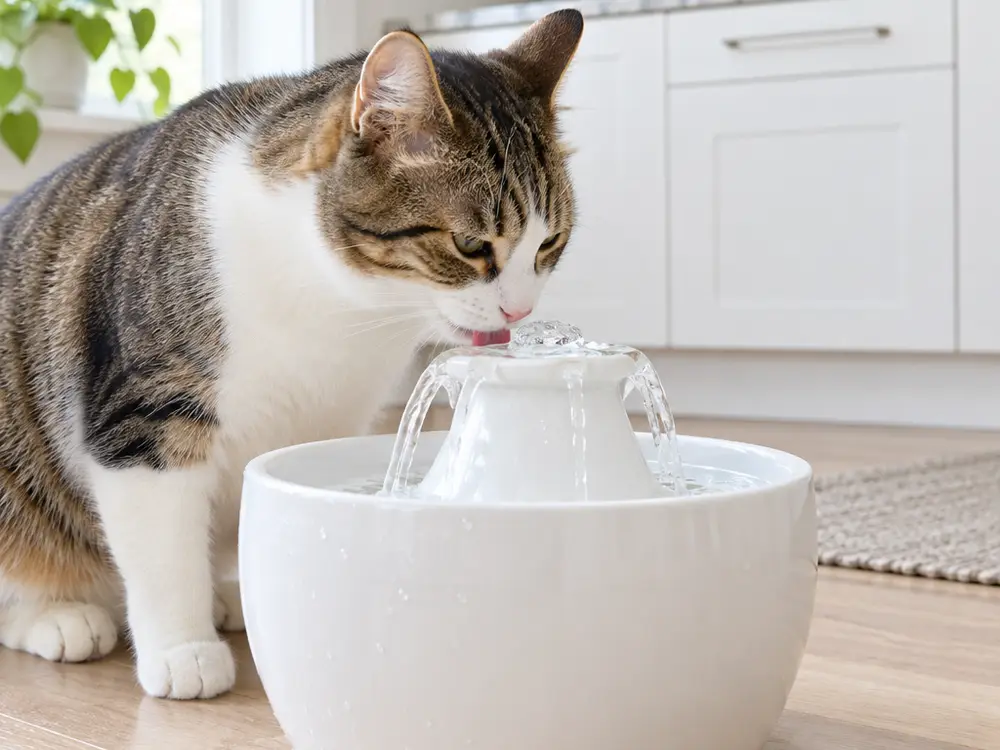
Many cats are attracted to moving water — a fountain may encourage them to drink more. Fountains need regular cleaning and filter changes, or they can become dirty. See our water fountain buying guide.
Other tricks
- Offer a glass of water on your bedside table if your cat likes to "steal" yours.
- Offer ice cubes to bat around in summer.
- Low-sodium plain broth ice cubes (no onion or garlic) can tempt some cats — check with your vet first if your cat has a medical condition.
Can cats drink milk?
Most adult cats are lactose intolerant, and milk often causes diarrhea. Water is all a cat needs to drink. See cat myths debunked.