Cat Body Language: What the Tail, Ears, Eyes and Purring Mean
Learn to read your cat: tail positions, ear signals, slow blinks, purring, meowing, kneading and the warning signs before a scratch or bite.
On this page
Cats communicate constantly — mostly through posture, tail, ears and eyes rather than sound. Once you learn the basics, you'll understand your cat far better, prevent scratches and bites, and spot stress or illness earlier. Always read the whole cat in context rather than a single signal.
The tail
| Tail position | What it usually means |
|---|---|
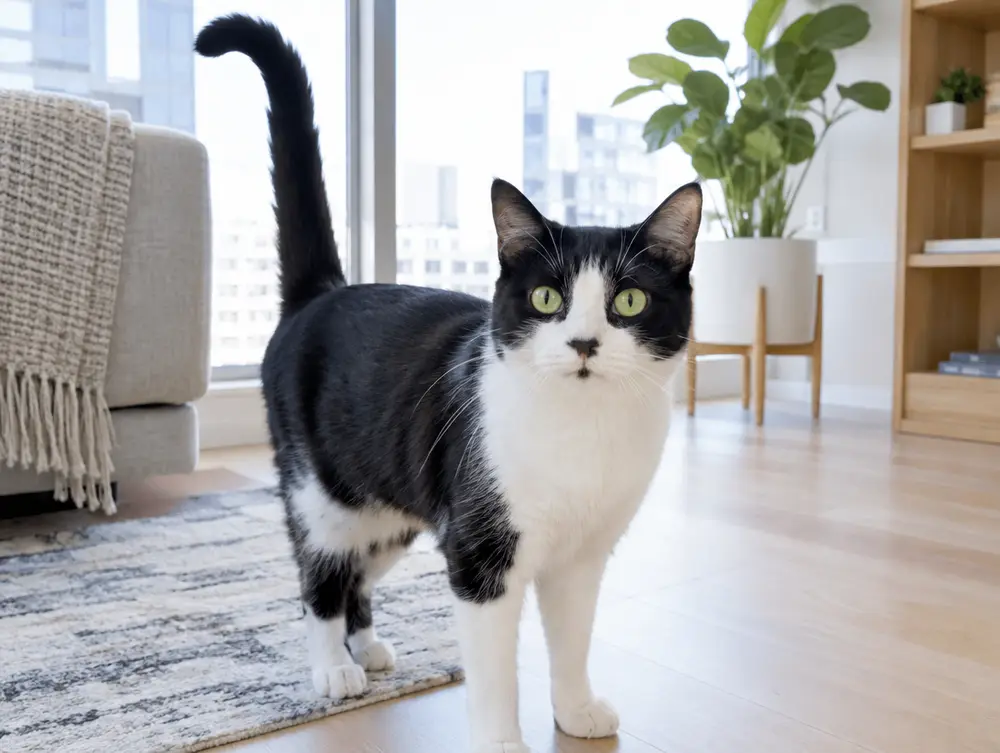
| Upright, tip relaxed or slightly curved ("question mark") | Friendly greeting, confident, happy to see you |
| Upright and quivering | Excited greeting (in unneutered cats, can accompany spraying) |
| Held low or tucked between the legs | Fearful, anxious or submissive |
| Puffed up ("bottle brush") | Frightened or startled — trying to look bigger |
| Swishing or thumping side to side | Irritated, overstimulated or focused on prey. A warning during petting |
| Tip twitching | Mild irritation or interest |
| Wrapped around the body when sitting | Relaxed or cautious, depending on the rest of the body |
| Wrapped around your leg or another cat | Affection |
The ears
- Forward and upright: alert, interested, relaxed
- Swiveling: listening, monitoring surroundings
- Turned sideways ("airplane ears"): anxious, irritated or unsure
- Flattened back against the head: fearful or defensive — likely to swat or bite if pushed
- Rotated back but upright: agitated, ready to act
The eyes
- Slow blinks — a cat "kiss". A relaxed cat who slowly closes and opens its eyes at you is signaling trust. Research has shown cats are more likely to approach people who slow-blink at them — try it.
- Half-closed eyes: relaxed, content
- Wide, dilated pupils: excitement, fear or play arousal (context matters; pupils also dilate in low light)
- Narrow pupils and hard stare: can signal aggression, particularly toward another cat
- Looking away: avoiding conflict — a polite signal
Body posture
- Relaxed, stretched out, belly shown: very relaxed and trusting. It's usually not an invitation to rub the belly — many cats will grab and bite if you do.
- Loaf position (paws tucked under): relaxed but ready to move; sometimes, when combined with a tense face and squinting, a sign of pain (see signs of pain)
- Crouched low, weight back, tail tucked: frightened
- Arched back with fur standing up, sideways stance: defensive — "stay away"
- Arched back with fur flat, rubbing against you: a stretch and a friendly greeting
- Rolling on the floor: friendly, playful, or (in unspayed females) a sign of heat
Sounds
- Meowing is mainly directed at humans; adult cats rarely meow to each other. Cats develop individual "vocabularies" with their owners — for food, attention or opening a door.
- Purring usually means contentment, but cats also purr when stressed, in pain or unwell — it may be self-soothing. See why do cats purr?
- Chirping or trilling: a friendly greeting, often used by mother cats to call kittens.
- Chattering at birds through the window: excitement or frustration at prey out of reach.
- Hissing, spitting, growling: fear or defensive warning — give the cat space.
- Yowling: can mean distress, pain, heat in unspayed females, territorial disputes, or cognitive changes in older cats. See night yowling.
Other behaviors
- Head bunting and cheek rubbing: depositing scent from facial glands — a sign of affection and "you belong to my group".
- Kneading ("making biscuits"): a comfort behavior carried over from kittenhood nursing.
- Grooming you or another cat: social bonding.
- Bringing you prey or toys: normal hunting behavior; don't punish it.
- Showing you their bottom with tail up: a friendly greeting (as cats sniff each other).
Warning signs before a bite or scratch
Cats usually give plenty of warning. During petting or play, stop if you see:
- Tail swishing or thumping
- Skin rippling along the back
- Ears turning sideways or back
- Head turning sharply toward your hand
- Body stiffening or sudden stillness
- Dilated pupils
Stopping early — before the bite — teaches your cat that they don't need to escalate. See play biting and cat aggression.
Signs of a relaxed, happy cat
- Soft eyes, slow blinks
- Ears forward and relaxed
- Tail up when approaching you
- Sleeping in open positions
- Eating, playing and grooming normally
- Cheek rubbing and seeking contact