Why Do Cats Purr? The Science Behind the Sound
How cats physically make a purr, why they purr when happy — and when stressed or in pain — the "solicitation purr", and what we know about purring and healing.
On this page
Purring is one of the most familiar sounds in the animal world, yet scientists are still uncovering exactly how and why cats do it. Here's what we know, and what it means for you as a cat owner.
How do cats purr?
Unlike a meow, which is produced only when a cat breathes out, a purr continues while breathing in and out. This is why it sounds like a steady, uninterrupted rumble.
For decades the main explanation was that muscles in the larynx (voice box) twitch rapidly, opening and closing the space between the vocal folds about 25–150 times per second. The air passing through creates the vibration we hear and feel.
More recent research has added a twist. A 2023 study of cat larynxes found that low-frequency purr-like sounds can be produced without the brain sending a signal for every vibration, thanks to special pads of tissue embedded in the vocal folds that make them vibrate slowly, a bit like the low "vocal fry" sound in human speech. Most likely both mechanisms play a part, and research is ongoing.
When do cats purr?
When they're content
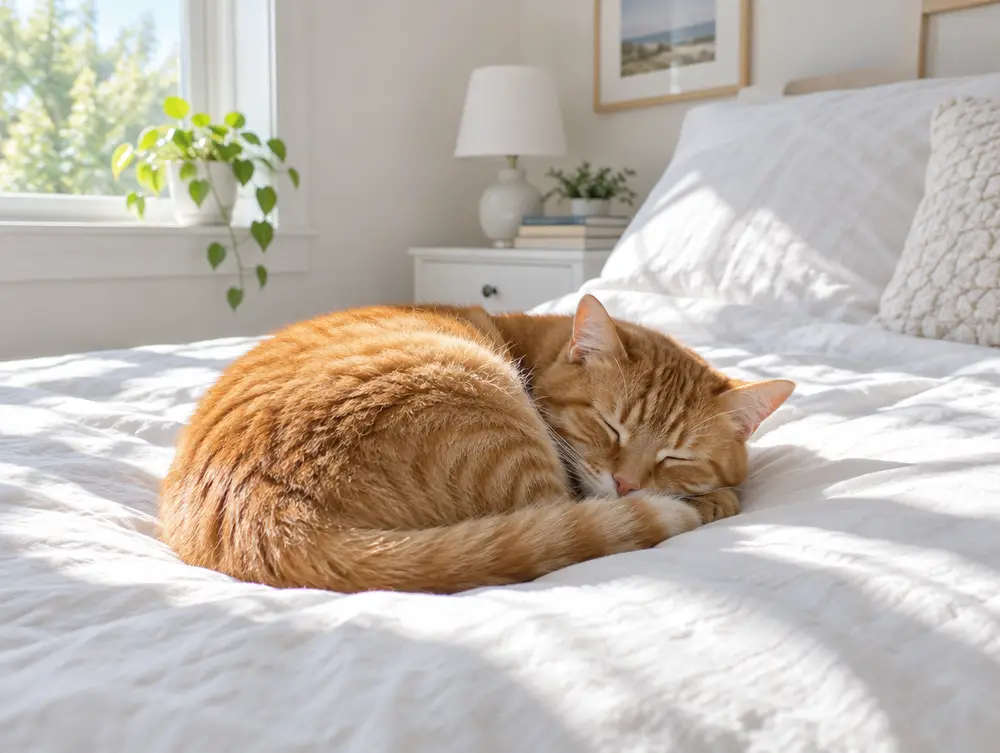
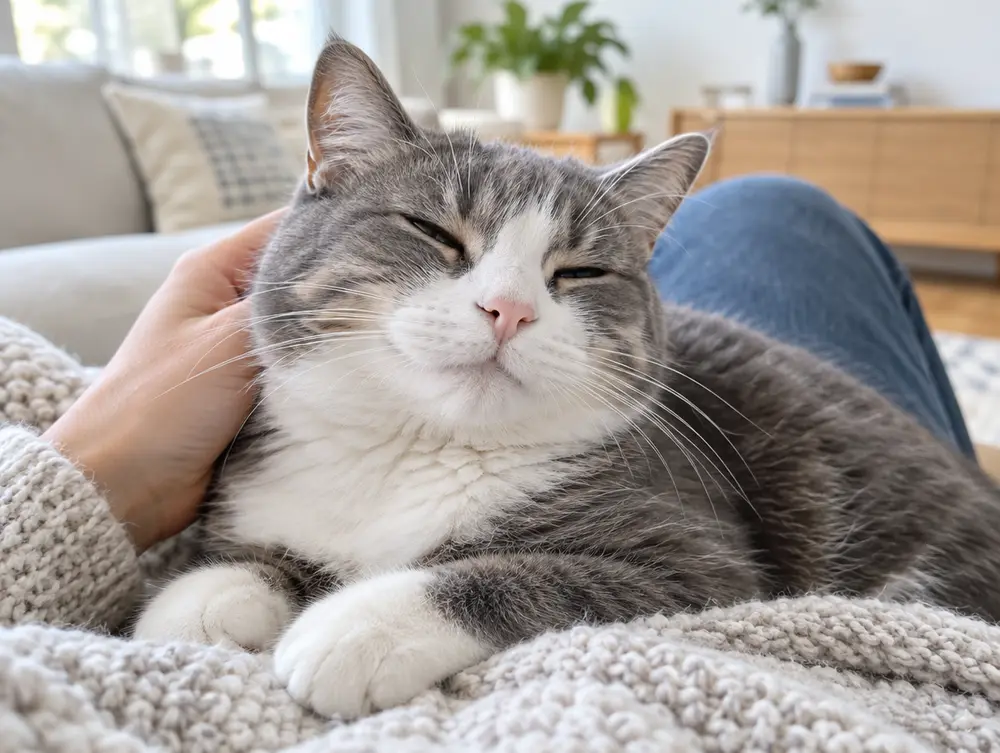
This is the purr everyone knows: curled up on a lap, being stroked, kneading a soft blanket. It's usually paired with relaxed body language: half-closed eyes, a loose body and a gently curled tail. See cat body language.
Between mother and kittens
Kittens can purr from just a few days old, while nursing. Because newborn kittens are blind and deaf, purring and its vibration likely help mother and kittens stay connected and signal "all is well". Mother cats often purr while giving birth and nursing.
When they want something
Researchers at the University of Sussex identified a "solicitation purr": a purr cats use when asking their owners for food. It contains a hidden high-pitched cry, similar in frequency to a human baby's cry, embedded in the normal rumble. In experiments, people rated these purrs as more urgent and less pleasant, even people who didn't own cats. If your cat's breakfast purr sounds oddly insistent, now you know why.
When they're stressed, unwell or in pain
This surprises many owners: cats also purr at the vet, when injured, during labor and sometimes when very ill or dying. In these situations purring may be a self-soothing behavior, or a signal to others that they're not a threat.
Can purring heal bones?
You may have read that purring frequencies (around 25–50 Hz) help bones and tissues heal. It's an intriguing idea: low-frequency vibration is used in some human physiotherapy, and cats are known for recovering well from certain injuries. But so far it's a hypothesis, not a proven fact. There's no good evidence yet that a cat's purr heals its own bones, or yours.
What is well documented is that many people find a purring cat on their lap calming. Studies on pet ownership link cats with lower stress for many owners, and purring is a big part of the experience.
Do big cats purr?
Some do. Cheetahs, pumas (cougars), lynxes, ocelots and servals can purr continuously, like house cats. The "roaring" big cats (lions, tigers, leopards and jaguars) have a differently structured larynx that lets them roar but not purr in the same continuous way. Many of them make a softer "chuff" or purr-like sound only while breathing out.
Why doesn't my cat purr?
Some cats purr so quietly you can only feel it with your hand on their throat or chest. Others rarely purr at all, especially cats from feral or stressful backgrounds. A non-purring cat can be perfectly happy. Look for other signs of contentment: slow blinks, a tail held up when greeting you, kneading and relaxed sleeping positions.
Quick facts
- Purring happens on both the in-breath and the out-breath.
- Typical purr frequency: roughly 25–150 Hz.
- Kittens start purring within days of birth.
- Cats purr when happy, hungry, stressed or in pain, so context matters.
- Purring is not proof of health. Changes in your cat's normal behavior always deserve attention.