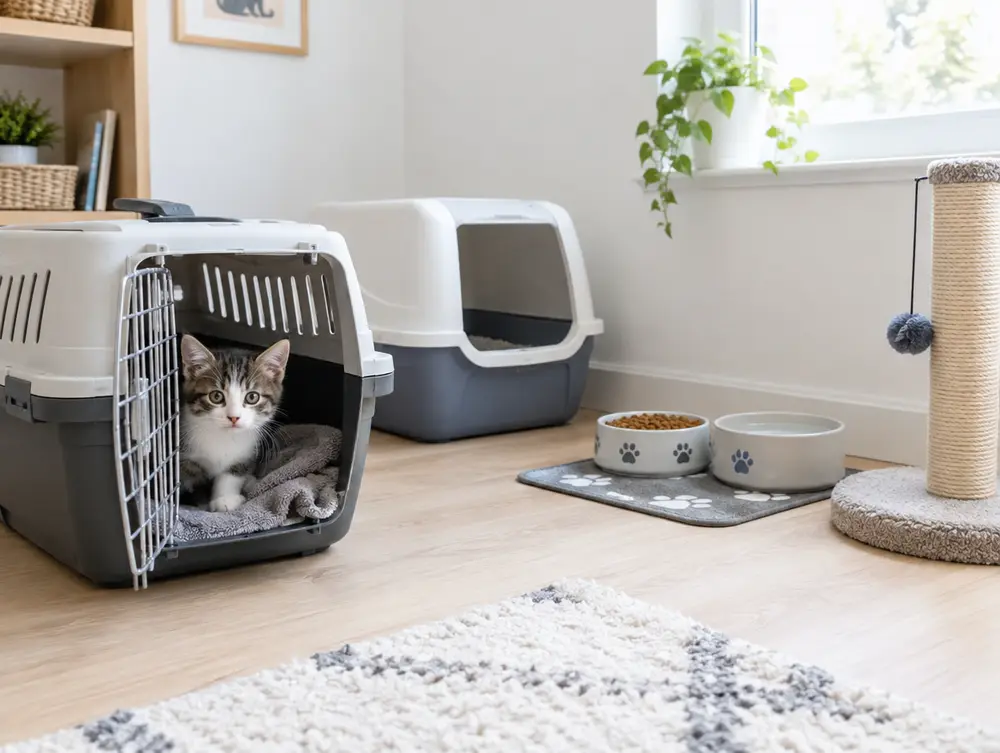
What to Buy Before Your Cat Arrives: The Complete Shopping List
The essential new-cat shopping list — carrier, litter box, litter, bowls, food, scratching post, bed and toys — plus what you can skip.

Having everything ready before your cat comes home makes the first days calmer for both of you. This list covers what you actually need, what's nice to have, and what to skip. For a printable, tickable version, use our new kitten checklist.
The essentials
1. A sturdy carrier
You'll need it on day one. Choose a hard-sided carrier with a removable top — at the vet, the top can be lifted off so your cat can be examined without being pulled out. It should be large enough for an adult cat to stand and turn around. See our carrier buying guide.
2. Litter box (or two)
- The box should be about 1.5 times the length of your cat from nose to base of tail. Kittens need a low entrance; seniors need a low side too.
- Uncovered boxes suit most cats best; some prefer covered ones. Start with open and watch.
- The general rule is one box per cat, plus one, in different locations.
Read the full litter box guide.
3. Litter
Unscented, fine-grained clumping litter is preferred by most cats. Ask the shelter or breeder what the cat is used to and start with the same — you can transition slowly later. See choosing cat litter.
4. Litter scoop and bags
A sturdy metal or thick plastic scoop with slots that suit your litter's grain size.
5. Food — the same food they're already eating
A sudden diet change often causes diarrhea, and stress makes it more likely. Buy a small supply of the food your cat already eats, and change gradually over 7–10 days if you want to switch. Make sure it's labeled "complete" for the right life stage. See how to choose cat food.
6. Food and water bowls
Ceramic, glass or stainless steel are easy to clean and don't hold odors like scratched plastic can. Many cats prefer wide, shallow dishes that don't brush their whiskers. Place water away from food — and never next to the litter box.
7. Scratching post
The single most important item for protecting your furniture. It must be:
- Tall enough for your cat to stretch fully (at least 80 cm / 32 in for adults)
- Heavy and stable — a wobbly post will be ignored
- Covered in sisal rope or sisal fabric
Add a horizontal cardboard scratcher too; some cats prefer scratching flat. See the scratching post buying guide.
8. A bed or hiding place
A covered bed, a cardboard box with a blanket, or a cat cave. New cats need somewhere to hide — especially in the first days.
9. Toys
At minimum: a wand (fishing rod) toy for interactive play, a few small balls or mice, and a puzzle feeder. Put wand toys away after play so strings can't be swallowed. See best types of cat toys.
10. Grooming basics
A brush or comb suited to the coat, and cat nail clippers. Long-haired cats need a wide-toothed metal comb.
11. ID
If your cat isn't microchipped, book it. Make sure the microchip is registered to your contact details. See microchipping and documents.
Nice to have
- Cat tree or wall shelves — vertical space reduces stress, especially in multi-pet homes. See catification.
- Water fountain — encourages some cats to drink more. See cats and water.
- Window perch — "cat TV" for indoor cats.
- Pheromone diffuser — synthetic feline facial pheromone products may help some cats feel calmer in a new home.
- Enzymatic cleaner — for accidents; regular cleaners don't remove the odor that attracts cats back.
- Toothbrush and cat toothpaste — start dental care young.
What you can skip
- Collars with bells for indoor cats (if you use a collar, choose a quick-release "breakaway" type)
- Scented litter and litter deodorizers — many cats dislike strong smells
- Cat milk and lots of treats — fresh water is all they need to drink
- Automatic self-cleaning litter boxes at first — they can frighten a new cat
- Declawing — this is an amputation, not a nail trim, and is banned or strongly discouraged in many countries
Before-arrival checklist
- Cat-proof the home: windows, balconies, plants, cables — see cat-proofing your home
- Set up a quiet "safe room" with litter, water, food, bed and hiding place
- Register with a vet and book a first check-up within a week
- Plan the journey home: carrier lined with a towel, direct route, no stops
- Read helping a new cat adjust