Introducing a New Cat to Children, Other Cats and Dogs
Step-by-step introductions that work: teaching children to handle cats safely, slow cat-to-cat introductions using scent, and safe cat-dog meetings.
On this page
First impressions matter to cats. A frightening first meeting can create tension that lasts months, while a slow, positive introduction usually leads to peaceful coexistence — and often friendship. The golden rule for every introduction is the same: go slower than you think you need to, and let the cat control the pace.
Introducing a cat to children
Before the cat arrives
Explain to children that the new cat will be scared at first and needs quiet. Agree on house rules together:
- Let the cat come to you — don't chase, grab or pick the cat up without an adult.
- Stroke gently along the head, cheeks and back. Avoid the belly, tail and paws.
- Never disturb a cat that is eating, sleeping, hiding or using the litter box.
- Use toys, not hands, to play. Hands are for gentle stroking.
- Walk away if the cat's tail is swishing, ears go flat or it growls or hisses.
The first meeting
- Have children sit quietly on the floor in the safe room.
- Give them a treat or a wand toy to offer.
- Let the cat approach. Keep the first meeting short — a few minutes — and end it on a good note.
- Repeat daily, gradually lengthening the time.
Introducing a new cat to a resident cat
Cats are territorial, so meeting a stranger on home turf is stressful. The safest method uses scent first, sight second, contact last.
Stage 1: separation (a few days to a week)
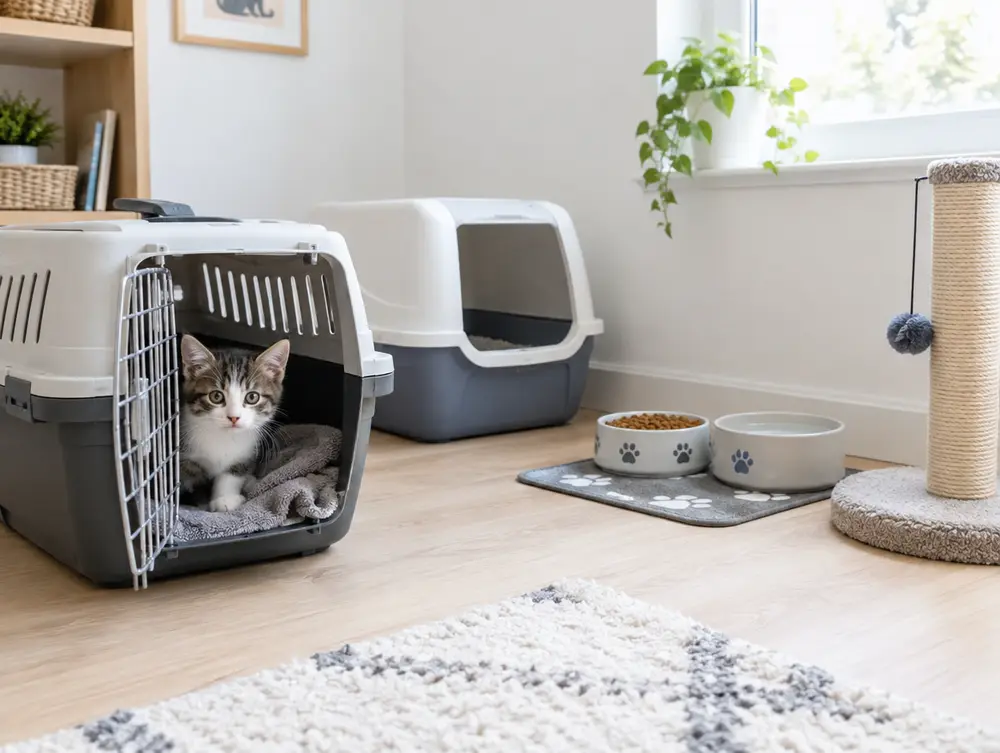
Keep the new cat in their own safe room with all resources. The resident cat keeps the rest of the house. They will smell and hear each other through the door — that's the start of the introduction.
Stage 2: scent swapping
- Rub a soft cloth on each cat's cheeks and place it near the other cat's food bowl.
- Swap bedding between the cats.
- Once both are calm, swap territories for an hour or so: let the new cat explore the house while the resident cat investigates the safe room.
Stage 3: seeing each other
- Use a baby gate, a screen door, or a door wedged open a few centimeters.
- Feed both cats on either side of the barrier, starting far apart and gradually moving the bowls closer over days.
- Play with both cats near the barrier using wand toys.
Stage 4: supervised time together
- Short, supervised sessions in a shared space, with plenty of treats and play.
- Have a way to separate them calmly (a cushion or piece of card) if tension rises — never use your hands.
- Increase the time gradually until they can share the house calmly.
What's normal: some hissing, staring or avoiding each other at first. Go back a stage if you see chasing with flattened ears, fighting, one cat hiding constantly, or one cat stops eating or using the litter box.
Make sure the home has multiple feeding spots, water bowls, litter boxes, scratching posts and high perches so the cats don't have to compete. Read one cat or two?
Introducing a cat to a dog
Many cats and dogs live happily together — especially when the dog is calm and responds to basic commands. Dogs with a strong prey drive (chasing squirrels, cats outdoors) may never be safe with cats.
- Separate at first, just like cat-to-cat introductions, and swap scents.
- Leash the dog for the first meetings. Reward the dog for calm behavior and looking away from the cat.
- Let the cat choose how close to come. Provide high escape routes and dog-free zones (a baby gate the cat can jump but the dog can't pass).
- Keep sessions short and end before either animal becomes overexcited.
- Never allow chasing — even in play. It's frightening for the cat and can turn dangerous.
- Keep the cat's food and litter box out of the dog's reach (dogs often eat cat food and litter box contents).
It can take weeks for a cat and dog to relax around each other. See cats and dogs for more tips.