Kitten Care Routine: Feeding, Sleep, Play and Development
A practical daily routine for kittens: how often to feed, how much they sleep, how to play safely, socialization and vet milestones in the first year.
On this page
Kittens grow at astonishing speed: they multiply their birth weight many times over in the first months, and by one year most are close to adult size. A predictable routine helps them feel secure — and helps you stay on top of feeding, litter and vet care.
Kitten development at a glance
| Age | What's happening |
|---|---|
| 8–12 weeks | Usual age to go to a new home (12–13 weeks for many pedigree kittens). First vaccines. Very playful, short attention span. |
| 3–6 months | Rapid growth; adult teeth come in (teething, chewing). Vaccination series completes. Spay/neuter often discussed from about 4–5 months. |
| 6–12 months | "Teenage" phase: energetic, testing boundaries. Growth slows. Booster vaccine around 6–12 months. |
| 12 months+ | Transition to adult food (later for large breeds such as Maine Coons). |
Feeding
- Feed a complete kitten food ("growth" or "all life stages") until about 12 months.
- Frequency: 3–4 meals a day up to about 6 months, then 2–3 meals a day.
- Kittens need more calories per kilogram than adults — follow the pack guide and adjust for body condition. Our cat food calculator gives an estimate.
- Fresh water always. No cow's milk — it commonly causes diarrhea.
- Wet food, dry food or a mix are all fine as long as the food is complete. See wet vs dry cat food.
Sleep
Kittens sleep a lot — often 16–20 hours a day, in short bursts. Growth happens during sleep, so let sleeping kittens lie. Provide warm, safe resting spots in different rooms, including somewhere elevated.
Play
Kittens need several short play sessions every day. Play builds coordination, burns energy and teaches them what's OK to bite.
- Use wand toys and toss toys, never your hands or feet. Kittens who learn to pounce on hands grow into adults who bite. See play biting.
- End each session with a "catch" and a small meal or treat — it mimics the hunt-catch-eat-groom-sleep cycle.
- Rotate toys to keep them interesting.
- Put strings and wand toys away after play.
Socialization
The period from about 2 to 7 weeks is the most sensitive for socialization, but kittens continue learning quickly until 12–14 weeks and beyond. Gently and positively expose your kitten to:
- Different people (with treats and gentle handling)
- Being picked up, having paws, ears and mouth touched (prepares for nail trims and vet visits)
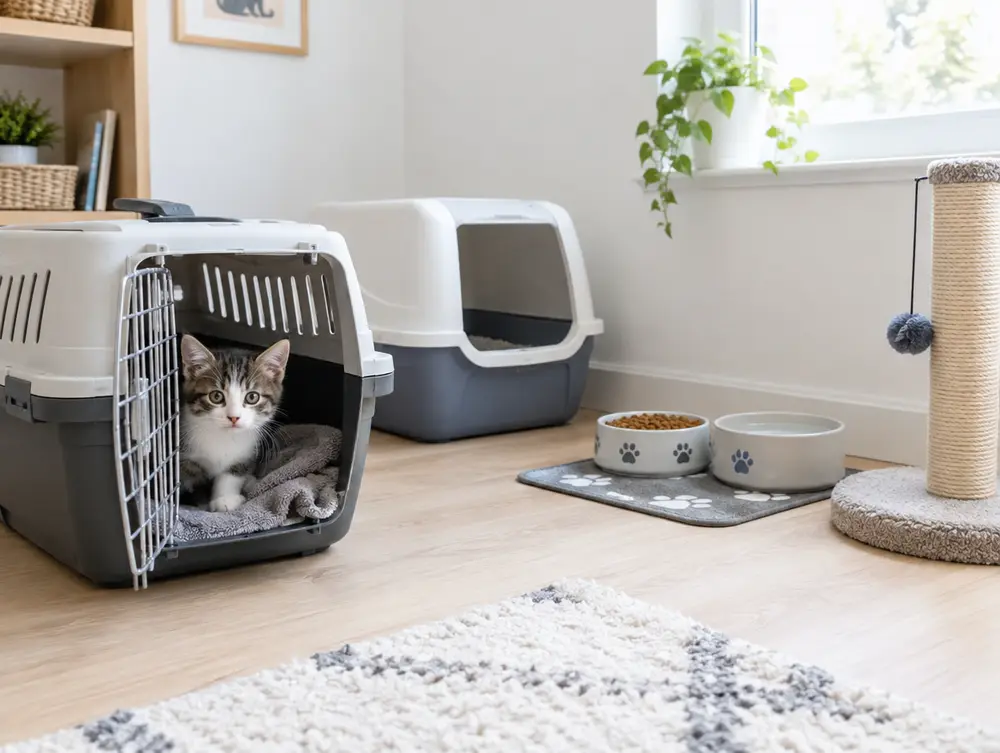
- The carrier — leave it out as a bed. See clicker training for carrier training.
- Household sounds: vacuum cleaner, doorbell, washing machine (at a distance at first)
- Brushing and tooth brushing
Always keep experiences positive and short; never force a frightened kitten.
Health milestones
- First vet visit within a week of arrival
- Vaccinations typically starting at 6–8 weeks, repeated every 3–4 weeks until 16 weeks or older — see vaccination schedule or use our vaccination planner
- Deworming and flea prevention as advised by your vet — see parasites
- Microchip and registration
- Spay/neuter — discuss timing with your vet; many recommend around 4–6 months. See spaying and neutering.
A sample daily routine
| Time | Activity |
|---|---|
| 7:00 | Breakfast, then a short play session |
| 8:00 | Scoop litter box |
| 12:00 | Lunch (for kittens under 6 months) |
| Afternoon | Naps; puzzle feeder or solo toys |
| 18:00 | Dinner and a longer play session |
| 21:00 | Gentle handling, brushing, short play |
| 22:00 | Small bedtime meal — helps kittens sleep through |
Consistency matters more than the exact times. Build your routine around your day and stick to it.