Cat First Aid: What to Keep in Your Kit and What to Do Until the Vet
What to put in a cat first aid kit, and basic first aid for bleeding, burns, heatstroke, choking, poisoning and falls while you get to the vet.
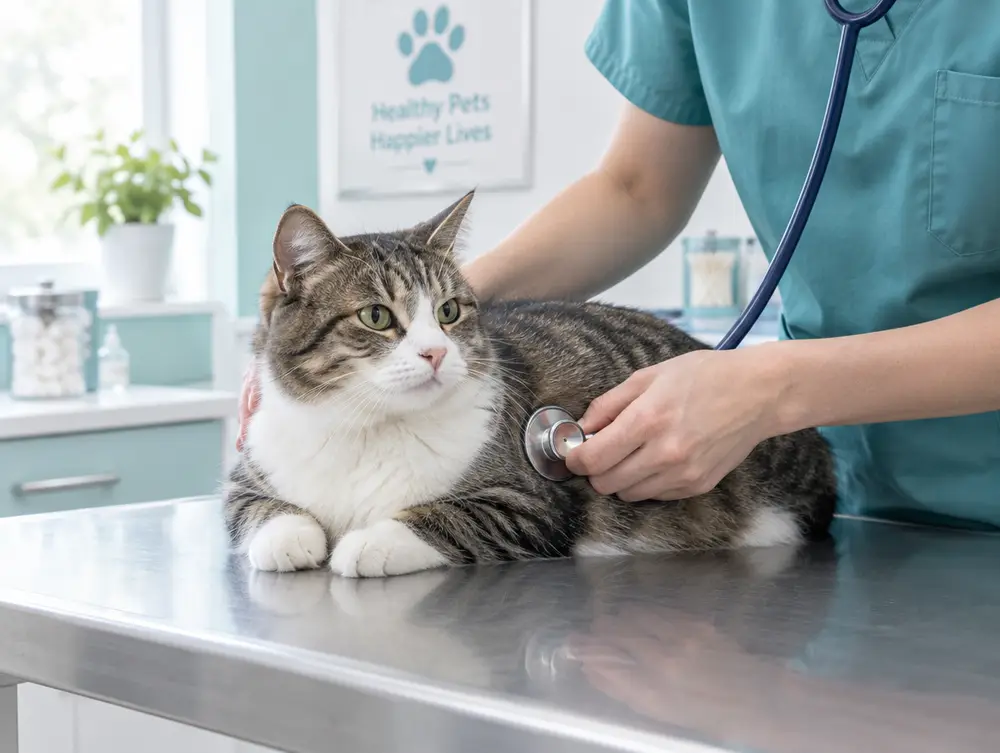
First aid is what you do on the way to the vet — not a replacement for veterinary care. The goal is to keep your cat safe and stable and prevent further harm. Put a kit together now; you'll be glad you did.
What to keep in a cat first aid kit
- Phone numbers: your vet, the nearest 24-hour emergency clinic, and an animal poison control line
- Your cat's medical records and a list of current medications
- Sturdy carrier (ideally with a removable top)
- Large towel or blanket for wrapping and lifting
- Sterile gauze pads and non-stick dressings
- Self-adhesive bandage (the stretchy kind that sticks to itself) — never wrap tightly
- Blunt-ended scissors
- Saline solution for flushing eyes and wounds
- Tick remover
- Digital thermometer (a cat's normal rectal temperature is about 38–39.2°C / 100.5–102.5°F) and lubricant
- Disposable gloves
- Soft e-collar (cone)
- Syringe (no needle) for giving water or medication if a vet instructs you
- Flashlight
- Cat-safe antiseptic recommended by your vet (many human antiseptics are not suitable)
Do not keep human painkillers for your cat. Never give paracetamol/acetaminophen, ibuprofen, aspirin or other human drugs.
Basic first aid
Bleeding
Press firmly with clean gauze or cloth for several minutes. If blood soaks through, add more on top rather than removing it. Keep your cat still and go to the vet. For a bleeding nail (cut too short), apply pressure or use a styptic powder.
Wounds and bite abscesses
Cat bites can look small but often become infected. Flush with saline, cover loosely and see your vet the same day. Warm, painful swellings a few days after a fight are often abscesses.
Burns and scalds
Cool with running lukewarm-to-cool (not ice-cold) water for 5–10 minutes, then cover loosely with a clean, damp, non-fluffy cloth and go to the vet.
Heatstroke
Signs: heavy panting, drooling, bright red gums, weakness, vomiting. Move your cat to a cool place, wet the fur with cool (not ice-cold) water, use a fan, and go to the vet immediately — heatstroke can damage organs even if the cat seems to recover.
Choking
If your cat is pawing at the mouth, gagging or struggling to breathe, look in the mouth carefully. Remove an object only if you can see it and can easily grasp it — never pull string or thread. Go to the vet immediately; don't delay trying things at home.
Suspected poisoning
Remove your cat from the source, call your vet or poison line immediately, and take the packaging or plant with you. Don't induce vomiting unless told to. See toxic foods and plants.
Falls and car accidents
Even cats who seem fine may have internal injuries, a collapsed lung or a broken jaw. Lift gently, supporting the body, place in a carrier or box and go to the vet.
Seizures
Don't try to hold your cat or put anything in their mouth. Move objects away, dim the lights, keep quiet and time the seizure. Call your vet; if it lasts longer than 2–3 minutes or repeats, go immediately.
Eye injuries
Don't let your cat rub the eye. Flush gently with saline for chemicals, and go to the vet the same day — eye injuries can worsen quickly.
Getting to the vet safely
- Call ahead so the team can prepare.
- Keep the carrier level and covered.
- Keep your cat warm (unless heatstroke), quiet and still.
- Bring your cat's records and anything involved (packaging, plants).
Know the warning signs in advance: read emergency symptoms.