Toxic Foods and Plants for Cats: The Complete Danger List
Lilies, onions, garlic, chocolate, grapes, xylitol, alcohol, human medicines and more — what is dangerous to cats, symptoms of poisoning and what to do.
Cats are more selective eaters than dogs, but their small size and unique liver metabolism make them very vulnerable to certain toxins. Some of the most dangerous substances — like lilies and paracetamol — are common in homes. Keep this list handy.
Extremely dangerous plants
Lilies — the number one plant danger
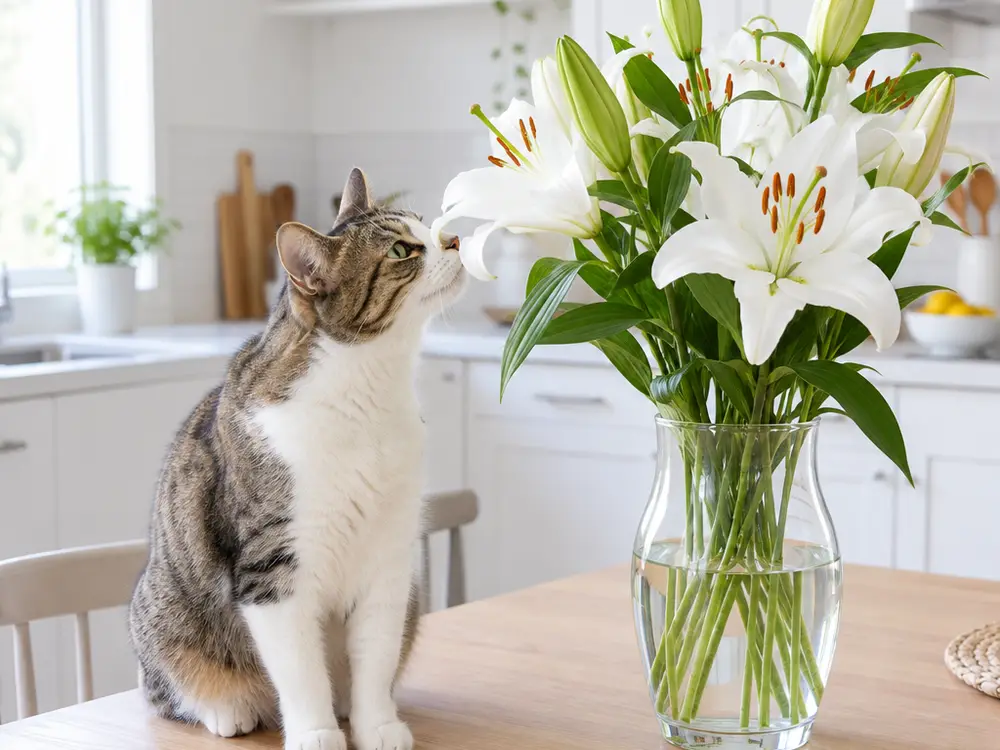
True lilies (Lilium species, such as Easter, tiger, Asiatic and Oriental lilies) and daylilies (Hemerocallis) can cause acute kidney failure in cats. Every part is toxic — petals, leaves, stems, pollen and even the water in the vase. A cat can be poisoned simply by grooming pollen off its fur. Early treatment (within hours) greatly improves the outcome. The safest rule: no lilies in a home with cats.
Other toxic plants
| Plant | Possible effects |
|---|---|
| Sago palm (Cycas) | Severe liver damage — very dangerous |
| Oleander | Heart rhythm problems |
| Azalea / rhododendron | Vomiting, weakness, heart problems |
| Tulip and daffodil bulbs | Vomiting, diarrhea; bulbs are most toxic |
| Dieffenbachia, philodendron, pothos, peace lily | Mouth irritation, drooling, vomiting |
| Aloe vera | Vomiting, diarrhea |
| Cyclamen | Vomiting, diarrhea |
| Autumn crocus | Severe vomiting, organ damage |
| Poinsettia | Mild mouth and stomach irritation (less dangerous than its reputation) |
For any plant not on this list, check a reliable database such as the ASPCA's toxic and non-toxic plant list before bringing it home. Cat-safe alternatives include spider plants, Boston ferns, calathea, areca palm, cat grass and catnip.
Toxic foods
| Food | Why it's dangerous |
|---|---|
| Onions, garlic, leeks, chives (raw, cooked, powdered) | Damage red blood cells, causing anemia — even in small repeated amounts. Watch for garlic or onion powder in baby food, soups and gravies. |
| Chocolate, cocoa, coffee, tea, energy drinks | Theobromine and caffeine cause vomiting, tremors, heart problems and seizures. Dark chocolate is most dangerous. |
| Grapes, raisins, currants, sultanas | Associated with kidney injury in dogs, and cats may be affected too — avoid. |
| Alcohol | Even small amounts cause dangerous drops in blood sugar, breathing problems and coma. Includes raw bread dough (ferments to produce alcohol). |
| Xylitol (sugar-free gum, sweets, some peanut butters) | Highly dangerous to dogs; avoid for cats too. |
| Raw eggs, raw fish | Risk of bacteria; raw fish fed long-term can destroy thiamine (vitamin B1). |
| Bones (especially cooked) | Can splinter, causing choking or gut injury. |
| Fat trimmings | Can trigger stomach upset and pancreatitis. |
| Milk and dairy | Most adult cats are lactose intolerant — diarrhea. |
| Dog food (as a main diet) | Lacks enough taurine and other nutrients cats need. |
| Tuna for people (fed often) | Not complete; excess can cause nutritional problems and mercury exposure. |
Household toxins
- Human medications: paracetamol/acetaminophen (can be fatal even in small doses), ibuprofen, aspirin, antidepressants, ADHD medication, cold and flu remedies.
- Permethrin in spot-on flea treatments for dogs — a leading cause of cat poisoning. Only use products labeled for cats, and keep cats away from recently treated dogs as directed on the product.
- Antifreeze (ethylene glycol) — sweet-tasting and deadly; causes kidney failure.
- Essential oils such as tea tree, eucalyptus, citrus and peppermint, especially concentrated or in diffusers.
- Rodenticides, slug pellets, insecticides.
- Cleaning products and bleach, particularly concentrated.
- Liquid potpourri, e-cigarette liquid (nicotine), cannabis products.
Symptoms of poisoning
Symptoms vary by toxin and may be delayed. Watch for:
- Vomiting, diarrhea, drooling or pawing at the mouth
- Lethargy, weakness, wobbling or collapse
- Tremors, twitching or seizures
- Difficulty breathing
- Pale or brown gums
- Increased thirst or urination, or no urination (kidney damage)
- Loss of appetite
What to do
- Remove your cat from the source and stop further exposure.
- Call your vet or emergency clinic now, or an animal poison control service for your country.
- Bring the packaging, plant or a photo with you.
- If the substance is on the fur (e.g. lily pollen, oil), prevent grooming and ask the vet how to wash it off.
- Don't induce vomiting or give milk, salt or oil unless instructed.
See also emergency symptoms and cat first aid.