Pet Insurance for Cats: Is It Worth It?
How cat insurance works — accident-only vs illness cover, deductibles, reimbursement, limits, exclusions and waiting periods — and how to compare policies.
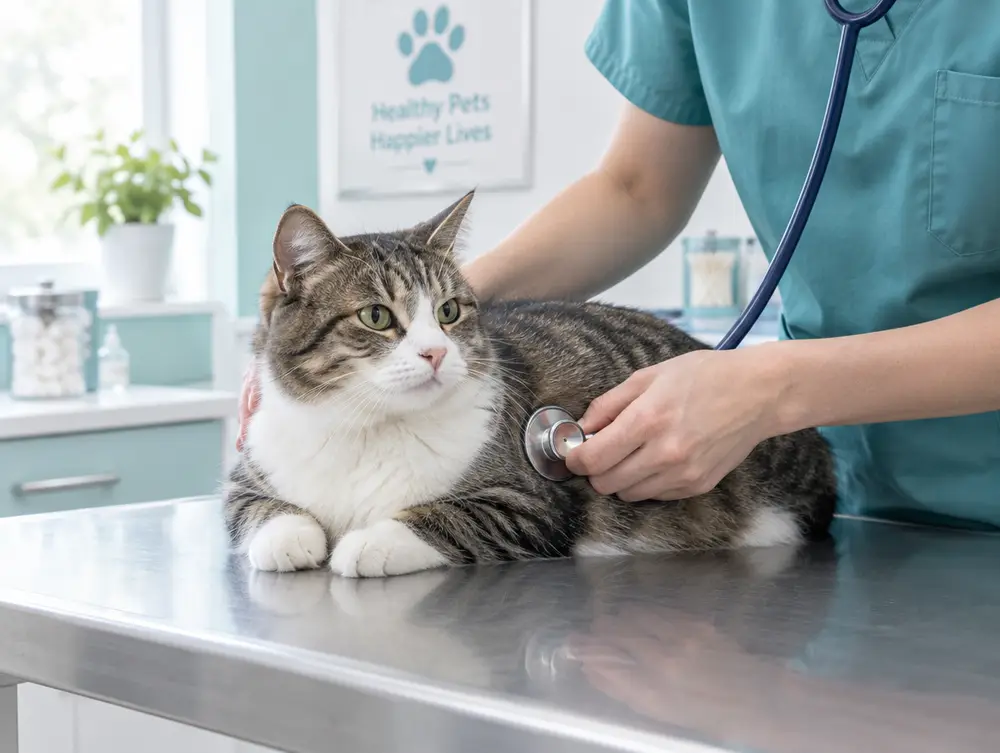
Veterinary medicine can do more than ever for cats — scans, surgery, chemotherapy, specialist care — but advanced treatment is expensive. Pet insurance helps spread that risk. Whether it's worth it depends on your finances and your attitude to risk. Here's how to decide and how to compare policies. (We don't sell or recommend specific insurers.)
How pet insurance works
You pay a monthly or yearly premium. If your cat needs treatment for a covered condition, you pay the vet (or the insurer pays them directly, in some countries) and claim back part of the cost, minus any deductible (or "excess").
Types of cover
| Type | What it usually covers |
|---|---|
| Accident-only | Injuries such as fractures, bites, swallowed objects. Cheapest. |
| Time-limited illness and accident | Each condition is covered for a set period (often 12 months) or up to a set amount, then no longer. |
| Maximum benefit per condition | Covered up to a limit per condition, for as long as it takes to reach it. |
| Lifetime / annual renewal cover | A yearly limit that resets each year — best for chronic conditions like diabetes or kidney disease, but usually the most expensive. |
| Wellness add-on | Routine care such as vaccines and parasite prevention. Often not better value than paying yourself. |
Terms differ between countries and insurers — always read the policy wording.
Key things to compare
- Annual or per-condition limit. Is it enough for a major surgery or a year of treating a chronic disease?
- Deductible: a fixed amount per claim, per condition or per year.
- Reimbursement rate: e.g. 70%, 80% or 90% of the bill after the deductible.
- Co-payment for older cats: some insurers increase your share after a certain age.
- Exclusions: pre-existing conditions are almost always excluded. Check dental illness, hereditary and congenital conditions, behavioral treatment and alternative therapies.
- Waiting periods: usually days to weeks for illness after starting a policy.
- Premium increases: how much premiums rise with age — ask for examples.
- Direct payment to vets: useful for large bills.
Is it worth it?
Insurance tends to make most sense if:
- An unexpected bill of $2,000–$5,000 would be a serious problem for you
- You'd want to pursue advanced treatment if your cat became seriously ill
- You get your cat young, before any conditions are "pre-existing"
Self-insuring may make sense if:
- You can comfortably cover large bills from savings
- You're disciplined enough to put money aside every month into a dedicated fund
Some owners do both: an accident-only or high-deductible policy plus savings for smaller bills.
Tips
- Insure early. Once your cat has had symptoms of any condition, it will likely be excluded forever.
- Read the policy wording, not just the summary.
- Keep records of all vet visits — insurers may ask for full medical history when you claim.
- Don't switch insurers casually once your cat has had health issues — new policies will exclude them.
- Check the policy covers dental illness if possible — dental disease is very common in cats.
For a full picture of costs, see how much does a cat cost or try our cat cost calculator.