Cats and Dogs Living Together: Making It Work
Which dogs are cat-friendly, how to introduce a cat and dog safely, dog-free zones, feeding and litter box management, and warning signs.
On this page
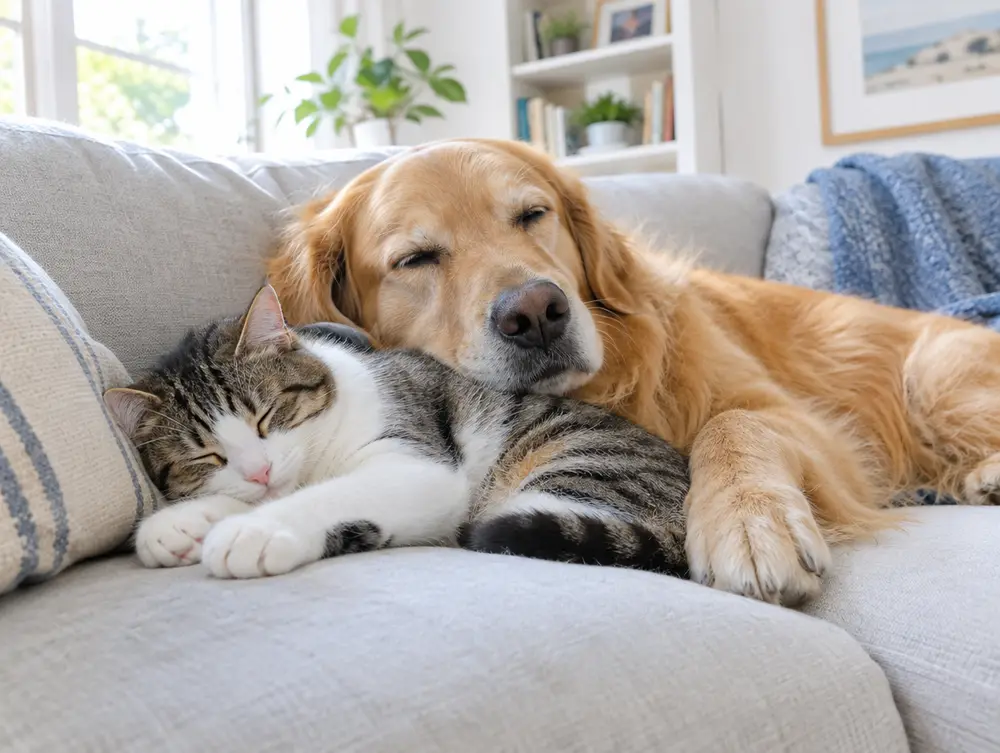
Cats and dogs can be the best of friends — or live peacefully side by side. Success depends on the individual animals, a careful introduction, and a home set up so the cat always feels safe.
Is your dog cat-compatible?
Consider:
- Prey drive: dogs who fixate on and chase small animals (squirrels, cats outdoors) are higher risk. Some breeds bred for hunting small game may have strong prey drive, but individuals vary.
- Energy and size: a boisterous young dog can frighten or accidentally injure a cat.
- Training: a dog who reliably responds to "sit", "leave it" and "come" is much easier to manage.
- History: has the dog lived peacefully with cats before?
The easiest combinations are often a calm adult dog with a confident cat, or a puppy and a kitten raised together (with supervision).
Is your cat dog-compatible?
Confident cats who have lived with dogs before adapt fastest. Very shy, elderly or fearful cats may find a dog too stressful. Shelters can often tell you whether a cat has been around dogs.
Set up the home first
- Dog-free zones: a room or area the dog can't enter (a baby gate with a cat door, or a gate raised off the floor so the cat can slip underneath)
- Vertical escape routes in every room — cat trees, shelves, furniture the cat can reach and the dog can't
- Litter boxes out of the dog's reach — many dogs eat cat feces
- Cat food out of the dog's reach — cat food is too rich for dogs, and dogs will steal it. Feed cats on a raised surface or in a cat-only room.
Introduction step by step
- Keep them separate for the first days, swapping bedding so they get used to each other's scent.
- First sight through a barrier (baby gate or cracked door), with the dog on a lead. Reward the dog for calm behavior and for looking away from the cat. Give the cat treats too.
- Supervised meetings in the same room, dog on a lead, cat free to come and go. Keep sessions short.
- Gradually increase time together, still supervised, as long as both are calm.
- Leash off, supervised once the dog reliably ignores the cat or is calm around them.
- Separate when you're not home until you're completely confident.
This can take days, weeks or months. Go at the pace of the more anxious animal. See introducing a cat to kids, cats and dogs.
Rules for long-term harmony
- No chasing, ever — even "in play". Interrupt and redirect the dog calmly.
- Reward calm behavior around the cat.
- Give both pets individual attention.
- Keep up the cat's safe zones for life.
Warning signs
From the dog: fixed staring, stiff body, trembling with excitement, whining, lunging, ignoring your cues. From the cat: constant hiding, not eating, litter box problems, over-grooming, hissing and swatting whenever the dog is near.
If you see these, go back a step and slow down. If the dog shows intense predatory focus, consult a qualified dog trainer or behaviorist who uses reward-based methods — some dogs can never be safely left with cats.
Health notes
- Never use dog flea products on cats — many contain permethrin, which is toxic to cats. See parasites.
- Keep vaccinations and parasite prevention up to date for both pets.