Wet vs Dry Cat Food vs Raw: Which Is Best?
The pros and cons of wet food, dry kibble, mixed feeding, raw and homemade diets for cats — and what matters more than the format.
On this page
Few topics divide cat owners like food. The good news: cats can thrive on wet food, dry food or a combination — as long as the food is nutritionally complete and fed in the right amount. Here's how the options compare.
First, what cats actually need
Cats are obligate carnivores. Their bodies are built to get energy from protein and fat, and they need certain nutrients that come mainly from animal tissue, including taurine, arachidonic acid, vitamin A in its active form, and niacin. A taurine deficiency, for example, can cause heart disease and blindness. That's why cats cannot be fed a vegetarian or dog-food diet, and why homemade diets are harder to get right than they look.
The most important words on any cat food label are "complete and balanced" (in the US, an AAFCO statement) or "complete" (in Europe, meeting FEDIAF guidelines) for your cat's life stage. A food labeled "complementary", "treat" or "for intermittent feeding" is not a full diet. More in how to choose cat food.
Wet food
Pros
- About 75–80% water, which helps with hydration — valuable because many cats drink little. See cats and water.
- Lower calorie density per bite, so it can help with weight control.
- Very palatable; useful for picky, sick or older cats.
- Often recommended as part of the diet for cats with urinary or kidney problems (under vet guidance).
Cons
- More expensive per calorie.
- Spoils quickly: remove uneaten food after about 30 minutes to an hour (sooner in warm weather); refrigerate opened tins and use within a couple of days.
- Messier, and not practical for puzzle feeders or free feeding.
Dry food (kibble)
Pros
- Convenient, economical and keeps well once opened (stored in an airtight container).
- Easy to measure and use in puzzle feeders and automatic feeders — good enrichment.
- A wide range of vet-prescribed therapeutic diets are available as dry.
Cons
- Only about 10% water — cats on dry-only diets need to drink more.
- Calorie-dense, so it's easy to overfeed. Always weigh it.
- Despite marketing, ordinary kibble does little to clean teeth; only specific dental diets with a recognized seal (such as VOHC in the US) have evidence of benefit.
Mixed feeding
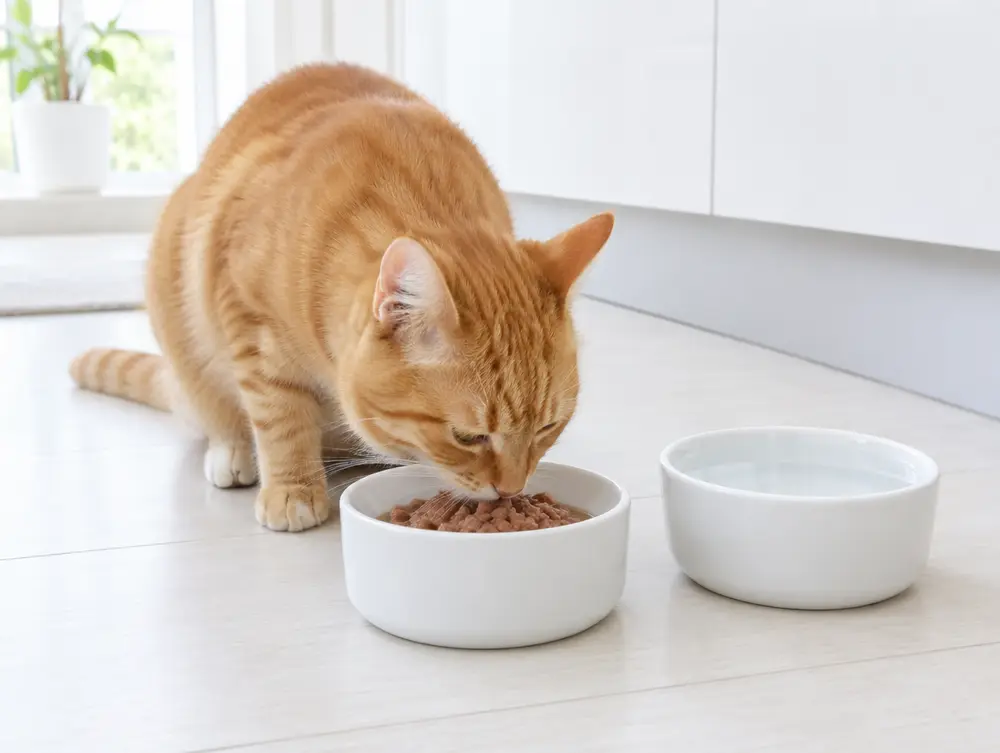
Many vets suggest a combination: for example, a wet meal morning and evening, plus a measured amount of dry food in a puzzle feeder during the day. This gives hydration benefits plus convenience and enrichment. Just make sure the total daily calories stay right — reduce each portion accordingly. Our cat food calculator helps.
Raw diets
Raw meat diets are popular, and some owners report shinier coats and smaller stools. However, most veterinary organizations advise caution because of:
- Bacterial contamination such as Salmonella, Listeria and E. coli — a risk to the cat and especially to children, older people, pregnant women and anyone with a weakened immune system in the home.
- Nutritional imbalances in many home-prepared and some commercial raw diets.
- Risk from bones: fractured teeth and gut injuries.
If you choose raw, use a commercial raw diet formulated to be complete, follow strict hygiene, and discuss it with your vet.
Homemade diets
Homemade cat food is possible but very hard to balance correctly; studies of online and book recipes have found most to be deficient in essential nutrients. If you want to cook for your cat, work with a board-certified veterinary nutritionist who can formulate a recipe with the right supplements.
Quick comparison
| Wet | Dry | Raw (commercial) | Homemade | |
|---|---|---|---|---|
| Hydration | Excellent | Low | Good | Good |
| Cost per day | Higher | Lower | Highest | Varies |
| Convenience | Moderate | High | Low | Low |
| Weight control | Easier | Needs care | Moderate | Varies |
| Food safety risk | Low | Low | Higher | Moderate |
| Easy to balance | Yes (if complete) | Yes (if complete) | Only if complete | Only with a nutritionist |
Changing food safely
Switch gradually over 7–10 days, mixing increasing amounts of the new food with the old. Sudden changes often cause vomiting or diarrhea. Some cats are very reluctant to try new textures; be patient, and never let a cat go without eating for more than a day while you persuade them — cats that stop eating can develop serious liver disease.
Bottom line: the best food is a complete, good-quality diet your cat will reliably eat, fed in the right amount to keep them lean — ideally with some wet food for hydration.