Cat Water Fountain Buying Guide: Do Fountains Help, and Which Type?
Do cat water fountains increase drinking? Compare ceramic, stainless steel and plastic fountains, filters, noise, cleaning and safety features.
On this page
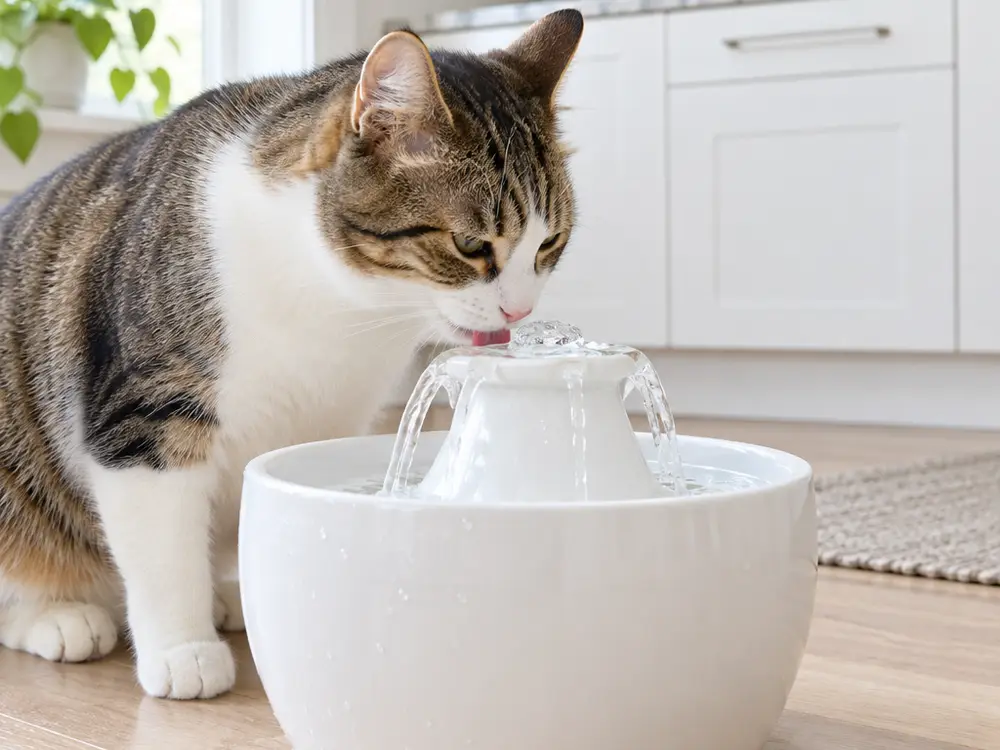
Many cats are attracted to running water, and some drink more from a fountain. Fountains aren't essential — a clean, wide bowl in the right place works for many cats — but they can be a helpful tool, especially for cats prone to urinary problems or on dry diets. Read cats and water for the full picture.
Do fountains really help?
Research results are mixed: some cats drink more from fountains, others show no preference, and a few prefer still water. The only way to know is to try — keep a regular water bowl available while your cat gets used to the fountain.
Materials compared
| Material | Hygiene | Durability | Noise | Cost | Notes |
|---|---|---|---|---|---|
| Ceramic | ★★★★★ | ★★★ (can chip) | ★★★★ (quiet) | Mid–high | Heavy, stable, easy to clean; check for lead-free glazes |
| Stainless steel | ★★★★★ | ★★★★★ | ★★★ | Mid–high | Hygienic, dishwasher-safe, very durable |
| Plastic | ★★ | ★★★ | ★★★ | Low | Scratches can harbor bacteria; some cats develop chin acne; choose BPA-free |
| Glass | ★★★★ | ★★ | ★★★★ | Mid | Easy to see water level |
Features to look for
- Easy disassembly — you'll clean it every week or two, so it must come apart easily.
- Quiet pump — noisy fountains can put cats off.
- Replaceable filters that are easy to buy and inexpensive; check the running cost.
- Wide drinking area so whiskers don't touch the sides.
- Adjustable flow — some cats prefer a gentle trickle.
- Low-water shut-off to protect the pump.
- Chew-resistant cord or cord cover — important for kittens.
- Capacity suited to your household: larger for multi-cat homes, but not so large you're tempted to clean it less.
- Cordless or battery options for spots without a socket.
Cleaning and maintenance
- Top up daily with fresh water.
- Clean thoroughly every 1–2 weeks (more in warm weather or multi-pet homes): disassemble, scrub all parts including the pump, rinse well.
- Replace filters as the manufacturer recommends.
- Check the pump for hair and debris.
A dirty fountain can grow biofilm and bacteria — worse than a clean bowl.
Placement
- Away from food and definitely away from the litter box.
- Near an electrical outlet but with the cord secured.
- Several water stations — fountain plus bowls — in different rooms.
Budget alternative
Wide ceramic bowls placed in several locations, refreshed daily, plus wet food in the diet can be just as effective for many cats.