Mixed-Breed Cats: Why a "Moggy" Might Be Your Perfect Cat
Domestic shorthairs and longhairs make up most pet cats. What to expect from a mixed-breed cat's personality, health and care, and how to choose one.
On this page
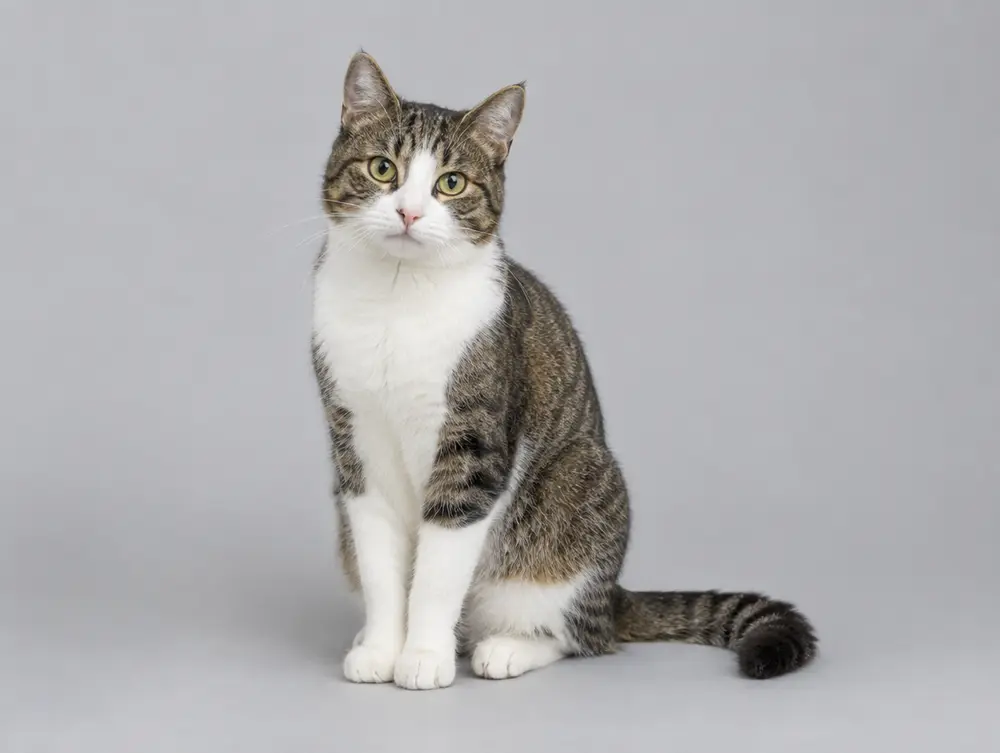
Most cats in the world aren't a breed at all. Shelters list them as domestic shorthair (DSH), domestic medium-hair or domestic longhair (DLH); in the UK they're affectionately called "moggies". They make up the overwhelming majority of pet cats — and for many first-time owners they're the best choice.
What is a mixed-breed cat?
A mixed-breed cat has no documented pedigree. Most are descended from generations of free-breeding house and farm cats rather than from a mix of recognized breeds. That's why "domestic shorthair" describes a coat length, not a breed: two DSH cats can look and behave completely differently.
Personality: every cat is an individual
Without breed tendencies to go on, personality depends on genetics, early socialization and life experience. That sounds unpredictable — but it's actually an advantage if you adopt an adult mixed-breed cat. Shelter staff and foster carers can usually tell you:
- whether the cat is a lap cat or prefers to sit nearby
- how it reacts to children, dogs and other cats
- its energy level and favorite games
- how it copes with handling, grooming and vet visits
Kittens are less predictable. A useful clue is the mother's temperament and whether kittens were handled by people in their first seven weeks.
Health: the benefit of genetic diversity
Mixed-breed cats come from a large, diverse gene pool, which reduces the risk of the inherited diseases concentrated in some breeds (such as polycystic kidney disease in Persian lines). They are not immune to illness: obesity, dental disease, kidney disease, hyperthyroidism, diabetes and urinary problems are common in all cats. Good preventive care matters more than pedigree — see our health section.
Size, coat and appearance
Most mixed-breed cats are medium-sized, weighing roughly 3.5–5.5 kg (8–12 lb), though some are much bigger. Every color and pattern appears — tabby, tuxedo, calico, tortoiseshell, ginger, black, white and more. A few color facts:
- Calico and tortoiseshell cats are almost always female, because the genes for orange and black are carried on the X chromosome.
- Ginger cats are more often male, for the same reason.
- Color does not reliably predict personality, despite popular stereotypes.
Care needs
- Short-haired cats: weekly brushing, more during shedding season.
- Long-haired cats: brushing several times a week to prevent mats — see brushing and shedding.
- Diet, play and vet care are the same as for any cat: see how much to feed a cat and why cats need play.
Why adopt a mixed-breed cat?
- Availability — every shelter has them, in every age and personality.
- Cost — adoption fees usually include vaccines, neutering and a microchip.
- Known personality when you adopt an adult.
- Genetic diversity and generally robust health.
- You save a life and free up a space for the next cat in need.
How to choose the right one
- Decide what matters most: energy level, sociability, age, coat length.
- Tell the shelter about your home — kids, other pets, working hours.
- Visit more than once and let the cat approach you.
- Ask about medical history and any behavior notes.
- Prepare your home before pick-up: see what to buy before your cat arrives.
Still curious about specific breeds? Browse the breed catalog or take our breed selector quiz — it can also tell you when a mixed-breed adult is likely to be the best fit.