Purebred or Mixed Breed? Breeder, Shelter or Stray
Compare pedigree cats and mixed-breed cats, and the pros and cons of getting a cat from a breeder, a shelter, a rescue, a friend or the street.
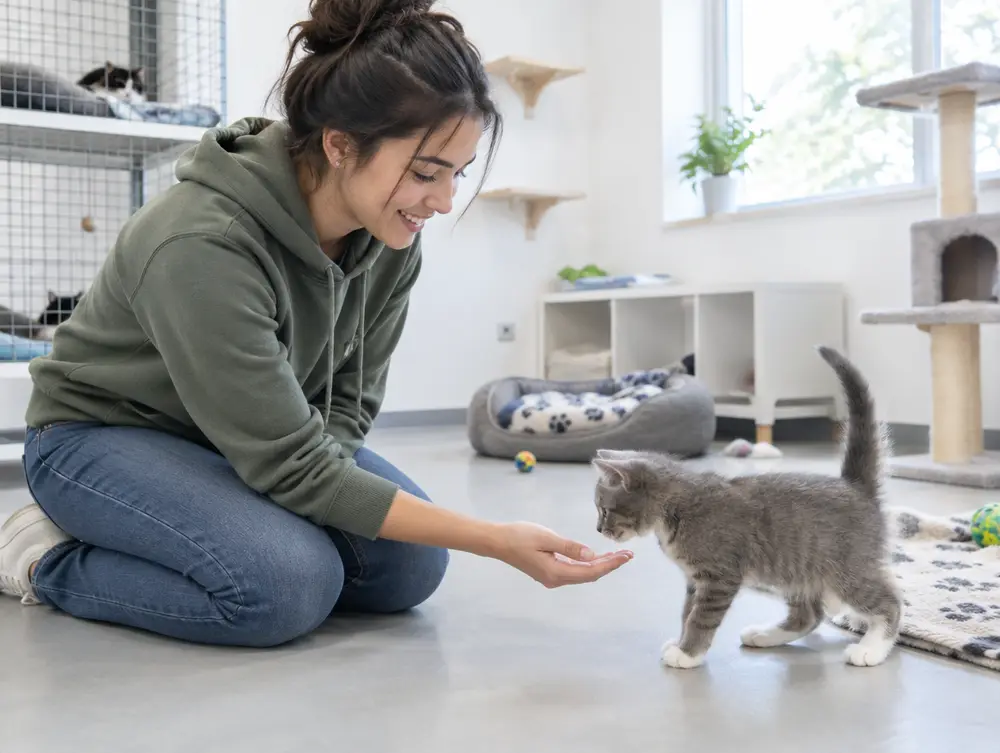
Where your cat comes from affects their health, their personality, how much you'll pay and how much support you'll get. There's no single "right" answer — but there are definitely wrong ones, like buying a kitten from a stranger online with no vet records.
Purebred vs mixed breed
Purebred (pedigree) cats have predictable looks and, to some extent, predictable temperament and care needs. If you want a very specific type of cat — a talkative Siamese, a placid Ragdoll — a breed makes that more likely.
The trade-offs: higher cost, and a higher risk of certain inherited conditions in some breeds. Flat-faced breeds (Persian, Exotic Shorthair) can have breathing and eye problems, and several breeds carry inherited heart or kidney disease. Good breeders test for these; poor ones don't. Browse our breed profiles for details.
Mixed-breed cats — often called domestic shorthairs or domestic longhairs, or "moggies" — make up the large majority of pet cats. They come in every size, color and personality, are widely available and generally benefit from greater genetic diversity. Adopting an adult mixed-breed lets you choose a known personality. Read more in mixed-breed cats.
Where to get a cat
Shelters and rescues — often the best choice for beginners
- Cats are usually vet-checked, vaccinated, dewormed, neutered and microchipped.
- Staff and foster carers can tell you about each cat's personality.
- Adoption fees are low relative to what's included.
- Many shelters offer support after adoption, and will take the cat back if it doesn't work out.
- Some rescues specialize in particular breeds.
Expect an application, perhaps a home check, and questions about your lifestyle. These are signs of a responsible organization, not a hurdle.
Responsible breeders
If you've chosen a particular breed, a responsible breeder is the right route. See how to choose a breeder for the green and red flags. In short: health testing, kittens raised in the home, kittens not leaving before 12–13 weeks, and a written contract.
Friends, neighbors and "free to good home" ads
This can work well — especially if you know the mother cat and the kittens have been raised indoors with people. But usually nothing is included: you'll pay for vaccinations, parasite treatment and neutering yourself. Ask to see the mother, and make sure kittens are at least 8 weeks old (ideally 12).
Pet shops and online marketplaces
Be very cautious. Kittens sold through pet stores or anonymous online ads often come from high-volume breeding operations with poor welfare, may be too young, and may be unvaccinated or sick. Never pay a deposit to someone who won't let you visit, and never agree to meet in a parking lot.
Taking in a stray
If a cat turns up at your door:
- Check it isn't someone's pet. Take it to a vet or shelter to scan for a microchip, post on local lost-pet groups and check with neighbors. Many "strays" are owned cats who roam.
- Get a vet check before it meets any resident pets — strays can carry parasites, ringworm or infectious diseases such as FeLV and FIV.
- Consider temperament. A friendly stray may make a lovely pet. A truly feral (unsocialized) adult cat is usually happier in a trap-neuter-return program than indoors.
Quick comparison
| Source | Cost | Health checks included | Personality known | Support |
|---|---|---|---|---|
| Shelter / rescue | Low | Usually full | Often yes | Good |
| Responsible breeder | High | Vaccines, genetic tests | Partly (breed + kitten) | Good |
| Friend / neighbor | Free–low | Rarely | Partly | Varies |
| Pet shop / online ad | Varies | Often poor | No | Poor |
| Stray | Free | None — vet check needed | Unknown at first | None |